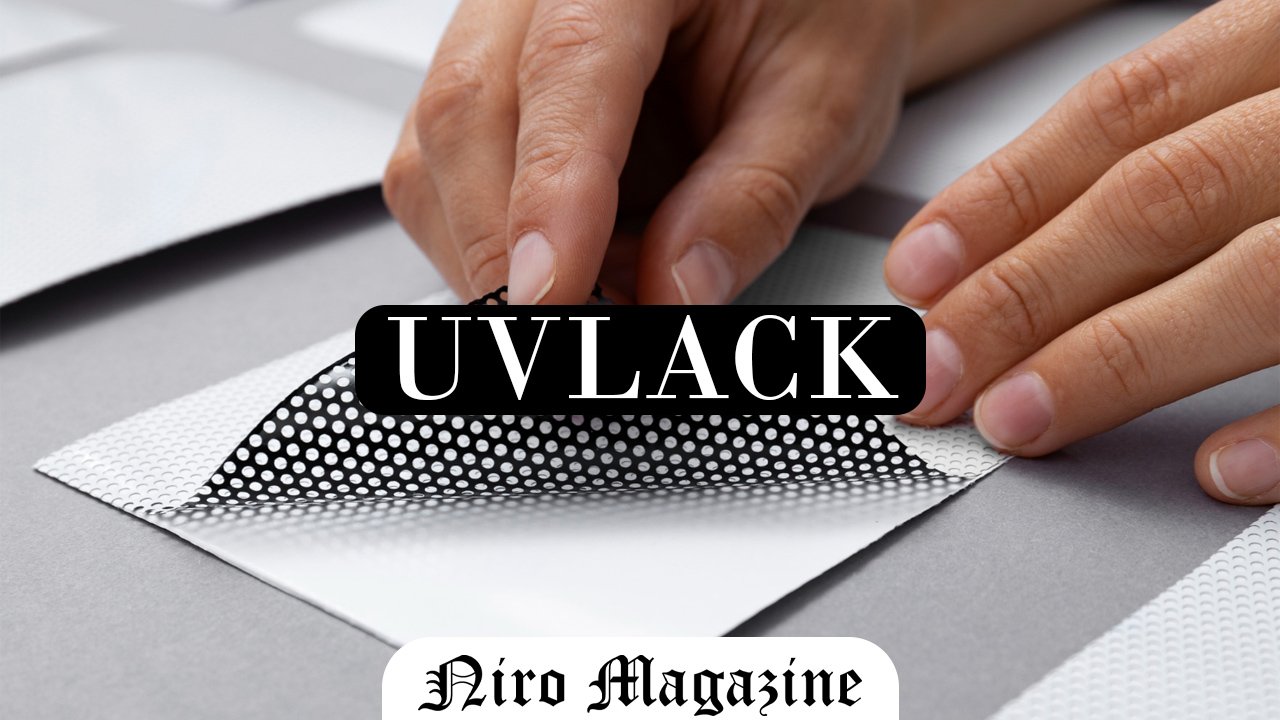
Uvlack is the clear, glossy coating you have probably touched without knowing its name. Run your finger across a shiny cereal box, a glossy business card, or a cosmetics box with a raised logo, and there is a good chance you are feeling Uvlack at work. Also called UV coating, UV varnish, or UV lacquer, it is one of the most common finishes used in printing and packaging today. This guide explains what Uvlack is, how it is made, where it shows up, and how it compares to other popular finishes so you can decide if it is right for your project.
What Is Uvlack?
Uvlack is a clear liquid coating that hardens almost instantly when it passes under ultraviolet (UV) light. Printers and packaging companies apply it as a thin layer on top of a printed sheet, then cure it with UV light to create a tough, shiny finish.
Unlike ink or paint that dries slowly in open air, Uvlack sets in seconds. This speed is the main reason so many printers rely on it. It lets them finish a job and move it along the production line right away instead of waiting hours for the coating to dry.
The name itself comes from combining “UV” (ultraviolet) with “lack,” a word used in several European languages for varnish or lacquer. In English speaking markets, you will more often see it called UV coating or UV gloss, but it refers to the same finish.
How Does Uvlack Work?
The science behind Uvlack is simpler than it sounds. The liquid coating contains special ingredients called photoinitiators. These are chemical compounds that stay stable in normal light but react strongly when hit with UV light.
Here is the basic process:
- A printer applies the Uvlack coating to a freshly printed sheet using a roller coater or a screen.
- The coated sheet passes under a UV lamp on the production line.
- The UV light triggers the photoinitiators, which set off a chemical reaction called photopolymerization.
- This reaction links the coating’s molecules together almost instantly, turning the liquid into a hard, smooth surface.
The entire curing step takes only a few seconds. Traditional coatings and varnishes, by comparison, dry through evaporation or air exposure, which can take minutes or even hours depending on humidity and thickness. That speed advantage is why Uvlack is so popular for high volume print runs like packaging, labels, and marketing materials.
Printers use two main types of UV lamps to cure Uvlack. Older setups rely on mercury vapor lamps, which give off strong UV light but also produce heat and use more energy. Many shops now use UV LED lamps instead, since they run cooler, last longer, and use less power. Either way, the coating hardens the moment it passes under the light, and it stays hard once cured. It will not soften again from heat or sunlight the way some other finishes can.
The Two Main Types of Uvlack Coating
Not all Uvlack finishes look or feel the same. Printers generally offer two main approaches, and each one serves a different purpose.
Full Uvlack Coating
Full Uvlack, sometimes called flood coating, covers the entire printed surface from edge to edge. This gives the whole piece a uniform shine and a smooth, even feel. It is a common choice for postcards, book covers, folding cartons, and any project where the goal is an all over glossy or satin look.
Spot Uvlack Coating
Spot Uvlack is applied only to selected parts of a design, such as a logo, a headline, or a product image, while the rest of the surface stays matte or uncoated. This creates a visual and tactile contrast that draws the eye straight to the coated area. Spot Uvlack comes in a few common styles:
- Gloss spot UV adds a bright, reflective shine to specific design elements.
- Matte spot UV gives a softer, more refined sheen that still stands apart from the surrounding surface.
- Textured or raised spot UV builds up a slightly thicker layer so the coated area feels raised when you run your finger over it, adding a three dimensional effect.
- Pearlescent spot UV mixes in fine shimmer particles for a subtle metallic glow.
Because spot Uvlack only covers part of the surface, it typically costs less than a full coating for smaller projects and uses less material overall.
Where Is Uvlack Used?
Uvlack shows up across a wide range of printed products and industries, mostly because it protects a surface while making it look more expensive. Common uses include:
- Product packaging, including cosmetic and skincare boxes, food and beverage cartons, electronics packaging like phone and accessory boxes, and retail boxes that need to stand out on a shelf.
- Commercial printing, such as business cards, postcards, greeting cards, brochures, presentation folders, and book covers.
- Labels and stickers, especially for products where durability and shine help signal quality, such as wine bottles or premium food jars.
- Luxury retail bags and inserts, where a glossy or textured logo adds a high end feel at the point of purchase.
- Furniture and wood finishing, where UV cured coatings protect surfaces from scratches and wear.
- Automotive interior parts and electronics casings, where fast curing speeds up manufacturing without sacrificing a durable finish.
While printing and packaging are the most common uses people encounter day to day, UV cured coatings play a similar protective role in several manufacturing industries.
Is Uvlack Good for the Environment?
Because Uvlack cures through a light triggered reaction instead of evaporation, very little solvent escapes into the air during the curing step itself, which is a point in its favor compared with some older solvent based varnishes. That said, aqueous coating is still generally viewed as the more eco friendly overall choice, since it is water based and easier for recycling facilities to process. Paper coated with a heavy layer of Uvlack can also be harder to break down during recycling than plain, uncoated paper. If sustainability is a top priority for your packaging, it is worth asking your printer about the specific materials they use and whether a lighter coating or an alternative finish might meet your goals.
Benefits of Uvlack Coating
Printers and brand owners choose Uvlack for several practical reasons, not just looks.
- A brighter, more vibrant finish. Uvlack creates a noticeably glossier “wet look” shine compared to most other coatings, which makes colors appear richer and more saturated.
- Strong protection. The cured layer resists scratches, moisture, and many household chemicals, helping printed pieces stay looking new for longer.
- Fingerprint and smudge resistance. Because the surface is sealed, oils from hands and light smudging show up far less than on uncoated paper.
- Faster production. Since the coating cures in seconds rather than hours, print runs move through the shop faster, which can shorten turnaround times.
- A premium feel. A glossy or textured coating often makes a product feel higher quality, which matters for retail packaging trying to catch a shopper’s eye.
- Design flexibility. Spot Uvlack lets designers highlight specific details, such as a logo or icon, without affecting the rest of the printed piece.
Downsides to Consider
Uvlack is not the right choice for every project. Before choosing it, it helps to know its limits.
- It can crack on folds. Because the cured coating is rigid, it may crack or flake along a fold or score line, which makes it a poor fit for booklets, greeting cards that fold in half, or any piece with sharp creases.
- It is hard to write on. Pen ink tends to sit on top of the glossy surface instead of soaking in, so Uvlack is not practical for order forms, response cards, or anything that needs handwriting.
- It works best on coated stock. Rougher, uncoated papers do not hold the coating evenly, so results can look patchy on those surfaces.
- It usually has to be the final step. Very few other finishes, like foil stamping or additional printing, stick well to a cured Uvlack surface, so it generally needs to be the last thing applied.
- It can cost more than simpler coatings. Aqueous coating, in particular, is usually a cheaper option for basic protection.
Uvlack Compared to Aqueous Coating and Lamination
Uvlack is only one of several finishing options printers offer. Aqueous coating and lamination are the two most common alternatives, and each one has its own strengths.
| Feature | Uvlack (UV Coating) | Aqueous Coating | Lamination |
|---|---|---|---|
| Gloss level | Very high, glossy “wet look” | Moderate gloss or soft matte | Gloss, matte, or soft touch options |
| Flexibility on folds | Can crack when folded or scored | Flexes well, handles folds easily | Very flexible, resists cracking |
| Drying or curing method | Cured instantly under UV light | Dries with heat and air | Applied as a film with heat or pressure |
| Chemical and scratch resistance | Strong | Good, but less resistant than UV | Very strong, adds a protective film |
| Typical cost | Higher | Most affordable | Higher, due to added material and time |
| Best suited for | Packaging and pieces that need shine and speed | Everyday print jobs needing basic protection | Booklets, folders, and pieces that get heavy handling |
In short, Uvlack wins when a project needs a fast, glossy, and durable finish. Aqueous coating is the budget friendly choice for general protection. Lamination is the top pick when a printed piece will be folded, handled often, or needs the toughest possible surface.
How to Decide If Uvlack Fits Your Project
A few simple questions can help you figure out whether Uvlack coating makes sense.
Will the finished piece be folded or scored? If so, a flexible option like aqueous coating or lamination will hold up better over time. Does anyone need to write on it by hand? If yes, skip Uvlack for that surface. Do you want a strong shelf presence with a high shine finish, and can the project stay flat or mostly flat? Uvlack is likely a great fit. Is the print run large, and does a fast turnaround matter? The quick curing time of Uvlack can help meet tight deadlines.
Many packaging designers also combine finishes. A common approach uses a matte laminate or matte full coating as the base, then adds spot Uvlack over the logo or key graphic. This gives a piece both durability and a standout visual detail.
Questions to Ask Your Printer Before Choosing Uvlack
A short conversation with your printer can save you time and money later. Before you commit to Uvlack, it helps to ask a few practical questions. Ask whether your chosen paper or board is compatible with UV coating, since some uncoated stocks do not hold the finish well. Ask for a physical sample so you can see and feel the gloss level before printing your full order. Confirm where any folds or score lines will sit on the design, and ask whether those spots should be left uncoated to avoid cracking. Finally, ask for a cost comparison between full Uvlack, spot Uvlack, and alternatives like aqueous coating, since prices can vary a lot between print shops and order sizes. A few minutes of planning up front usually leads to a much better final product.
Conclusion
Uvlack is a straightforward but effective piece of printing technology. It takes a liquid coating, hardens it almost instantly with UV light, and leaves behind a glossy, protective layer that makes printed materials look sharper and last longer. Whether it appears as a full coating across an entire box or as a small spot highlight on a logo, its job stays the same: protect the print and make it stand out.
Choosing the right finish always comes down to how a printed piece will be used. For flat, eye catching packaging and fast paced print runs, Uvlack is often the better choice. For anything that folds, gets handwritten notes, or needs maximum flexibility, another finish like aqueous coating or lamination may serve the job better. Knowing the difference helps you pick a finish that looks great and holds up the way you need it to.
Frequently Asked Questions
What does Uvlack mean?
Uvlack refers to a UV coating, also known as UV varnish or UV lacquer. It is a clear liquid finish that hardens under ultraviolet light to protect and add shine to printed materials.
Is Uvlack the same as regular varnish?
Not quite. Regular varnish dries slowly through air exposure, while Uvlack cures almost instantly under UV light and typically produces a glossier, more durable finish.
Can Uvlack be used on any type of paper?
It works best on coated paper stock. Uncoated or very rough paper does not hold the coating evenly, so results can look uneven on those surfaces.
Does Uvlack crack easily?
It can crack along folds or score lines because the cured layer is rigid. For pieces that fold, a more flexible finish like aqueous coating or lamination usually works better.
Is spot Uvlack more expensive than full Uvlack?
For small projects, spot Uvlack is usually cheaper since it only covers part of the surface. For large full coverage jobs, full Uvlack coating can be more cost effective overall.