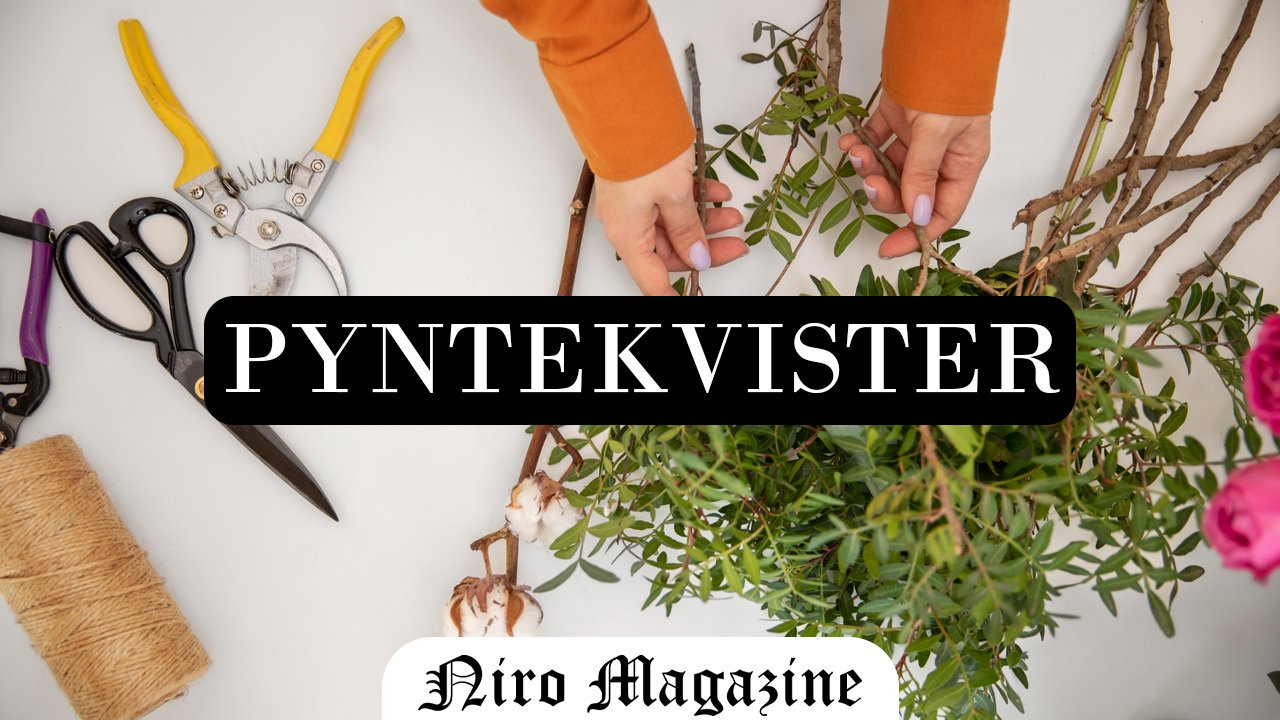
Pyntekvister is a Norwegian and Danish word for decorative branches, the cut twigs that people bring indoors and place in water so the buds slowly open into leaves or flowers. The word comes from two smaller words: “pynte,” which means to decorate, and “kvist” or “kvister,” which means twig or branch. Put together, pyntekvister simply means “decoration twigs.” In everyday Scandinavian life, the word covers everything from a handful of pussy willow stems in a vase to a full arrangement of blooming cherry branches on a dining table.
This article explains what pyntekvister are, where the idea comes from, which branches work best, and how the forcing process actually happens inside a plant. It also walks through the steps for making your own arrangement at home and how to keep it looking fresh for as long as possible.
What Does Pyntekvister Mean?
At its core, a pyntekvist is any cut branch that is kept mainly for how it looks rather than for its wood or fruit. People choose branches with buds, catkins, or early flowers, then let nature finish the job indoors. The buds that would normally open outside in spring open early once the branch sits in a warm room with steady light and fresh water.
The term is closely related to “pyntegrønt,” a broader Norwegian word for decorative greenery used at Christmas, such as fir and spruce branches for wreaths and garlands. Pyntekvister usually points to something a little different: bare, leafless, or budding branches rather than evergreen greenery. Norwegians and Danes use both words depending on the season and the look they want.
Where the Idea Comes From
Bringing branches indoors is not a new trend in the Nordic countries. It grew out of a much older habit of decorating homes with whatever the local land offered at each time of year.
During winter holidays, Norwegian households have long used pyntegrønt, cut evergreen boughs and juniper, to freshen up a room and mark the season. Chopped juniper spread across the floor for gatherings and celebrations was once a common sight in Norwegian homes, according to Store norske leksikon, the national encyclopedia of Norway.
Around Easter, the tradition shifts to a different kind of branch. In Sweden, Norway, and Denmark, families cut birch twigs, known as påskeris in Swedish and Norwegian, and decorate them with brightly colored feathers, paper, and small ornaments. The bare branches sit in a vase for weeks, and by the time Easter arrives, the warmth of the home has often coaxed the first small leaves open. Scandinavia Standard and other Nordic lifestyle publications describe this as one of the most recognizable Easter customs in the region, a simple way to mark the change from winter to spring inside the house before it has fully arrived outside.
Pyntekvister grew naturally out of these older customs. As Scandinavian interior design became known worldwide for its calm, natural look, decorative branches became a year round habit rather than a holiday only tradition. A vase of forced branches fits easily into the pared back, wood and light filled style that Nordic homes are known for.
Popular Branches Used as Pyntekvister
Not every branch forces well indoors, so most people choose from a short list of species that are known to respond quickly to warmth and light. Gardeners in Norway, Sweden, and Denmark tend to favor whatever grows nearby, which is part of why the tradition feels so tied to the local landscape rather than to a florist’s shelf. Common choices include:
- Pussy willow (Salix species): Prized for its soft, silvery catkins, pussy willow is one of the easiest branches to force and lasts a long time once cut.
- Birch (Betula species): The traditional choice for Scandinavian Easter twigs, valued for its thin, flexible branches and pale bark.
- Forsythia: Known for bright yellow flowers that open quickly, often within one to two weeks indoors.
- Flowering cherry and plum: Produce delicate pink or white blossoms and are popular for a softer, more romantic look.
- Quince: Offers striking orange or red blooms and sturdy branches that hold their shape well in an arrangement.
- Magnolia: Large, fragrant flowers that make a dramatic centerpiece, though the branches take a little longer to open.
- Hazel: Grown mainly for its long, dangling catkins rather than flowers, giving an arrangement a soft, textured look.
Gardening authorities such as the Old Farmer’s Almanac and university extension programs in the United States list many of these same species as reliable choices for forcing branches indoors, which shows that the practice is not unique to Scandinavia. It is simply part of everyday plant science.
How Pyntekvister Work: The Science of Forcing Branches
The process behind pyntekvister is a well documented horticultural technique known as forcing. Deciduous trees and shrubs form their flower and leaf buds the previous summer, then enter a dormant state through the cold months. Dormancy protects the buds from freezing, but it also means the plant needs a certain amount of cold exposure before it is ready to grow again.
Once a plant has experienced enough cold weather, usually by mid to late winter in most temperate climates, its buds are biologically ready to open as soon as conditions warm up. Cutting a branch at this point and bringing it indoors tricks the plant into thinking spring has arrived early. The warmth of the room, combined with water drawn up through the stem, triggers the stored buds to swell and open days or weeks ahead of their outdoor schedule.
Species vary in how quickly they respond. Forsythia and pussy willow often open within a week or two, while magnolia and some flowering cherries can take three weeks or longer. Cutting branches too early in winter, before they have had enough cold exposure, usually results in buds that stay closed or drop off instead of opening.
How to Make Your Own Pyntekvister at Home
Making a pyntekvister arrangement takes very little equipment, just a clean vase, water, and a pair of sharp pruning shears. The steps below work for most of the species listed above.
- Choose the right time. Late winter, once the coldest weeks have passed, gives the best results. Branches cut too early in the season often fail to open.
- Pick healthy branches. Look for stems with plenty of plump, rounded buds. Avoid thin, damaged, or diseased wood.
- Cut at an angle. A diagonal cut exposes more surface area, so the stem can absorb water more easily.
- Split or crush woody stems. For thicker branches, a small vertical cut or a light crush at the base helps water travel further up the stem.
- Place branches in room temperature water. Cold water can slow the process, while very warm water can shock the stem.
- Find a bright spot away from direct heat. Indirect light and a moderate room temperature encourage steady, even growth.
- Change the water every few days. Fresh water keeps bacteria from building up and helps the branches stay hydrated.
- Recut the stems occasionally. Trimming an inch off the base every week or so keeps the branch able to draw up water.
Most branches begin to show swelling buds within a few days, with full blooms or leaves appearing anywhere from one to three weeks later, depending on the species and the room’s conditions.
Caring for Pyntekvister After They Bloom
Once the buds open, a little regular care keeps the display looking good for as long as possible. Keep the arrangement out of direct sunlight and away from heating vents, since both can dry out the flowers or leaves faster than normal. Cool rooms generally extend the life of the blooms compared to warm ones.
Continue changing the water every few days and give the stems a fresh cut whenever they start to look tired. Flowering branches such as forsythia, cherry, and quince typically stay attractive for one to two weeks once fully open. Branches grown mainly for foliage or catkins, like birch, hazel, and pussy willow, often last much longer since there are no petals to wilt or drop.
Some pussy willow stems will even grow small roots while sitting in water. If this happens, the cutting can be planted outdoors once the weather warms, giving the branch a second life as a young shrub rather than ending up as green waste.
Why People Choose Pyntekvister for Home Decor
Pyntekvister have a few clear advantages over a bunch of store bought flowers. Many of the branches come from pruning that would happen anyway in a garden or park, so the material is often free and would otherwise go to waste. A single arrangement can also last several weeks from first cutting to final bloom, which is longer than most cut flowers survive in a vase.
The look fits naturally into the relaxed, nature forward style that Nordic interiors are known for. Bare branches slowly filling with color as the days pass give a room a sense of the season changing, something a static bouquet cannot offer. For anyone who enjoys watching plants grow and change, forcing branches indoors also brings a small, calming ritual into a winter routine, checking the buds each morning and noticing the first hint of color appear.
Because the branches are sourced from common garden and roadside species rather than imported flowers, pyntekvister tend to have a smaller environmental footprint too. Many households simply save the trimmings from an annual pruning session instead of buying anything new, which keeps the whole practice close to free. That combination of low cost, low waste, and a slow, satisfying payoff explains why the practice has stayed popular in Scandinavian homes for generations and continues to spread to gardeners and decorators elsewhere.
Common Mistakes to Avoid
A few simple errors account for most disappointing results with pyntekvister. Cutting branches too early in winter, before they have had enough cold exposure, is the most frequent mistake, since the buds simply are not ready to grow yet. Placing an arrangement in direct sunlight or right next to a heater can dry out delicate petals before they even fully open.
Forgetting to change the water is another common issue, since stagnant water allows bacteria to build up and block the stem from absorbing moisture. Finally, choosing very old, thick, or woody branches instead of younger growth with visible buds often leads to slow or uneven results, since older wood is less responsive to the warmth and light that trigger forcing.
Conclusion
Pyntekvister are a simple, low cost way to bring the changing seasons indoors, whether that means a handful of pussy willow stems in late winter or a full vase of blooming cherry branches by early spring. The idea rests on solid, well understood plant science, and the materials are often already growing in a nearby garden or park. With the right timing, a little patience, and a few basic care steps, almost anyone can recreate this Scandinavian tradition at home.
Beyond the practical side, pyntekvister offer something a store bought bouquet rarely can, the slow, visible process of watching a bare branch fill with life over a few short weeks. That small daily ritual, paired with a naturally beautiful result, is likely why the tradition has lasted so long in Scandinavian homes and continues to find new fans well beyond the region.
Frequently Asked Questions
What does pyntekvister mean?
Pyntekvister is a Norwegian and Danish word for decorative branches. It combines “pynte,” meaning to decorate, with “kvister,” meaning twigs or branches.
Which branches work best for pyntekvister?
Pussy willow, birch, forsythia, flowering cherry, quince, magnolia, and hazel are among the most popular choices because they respond reliably to forcing indoors.
How long does it take for pyntekvister to bloom indoors?
Most branches show swelling buds within a few days and open fully within one to three weeks, depending on the species and the room’s temperature and light.
Can I keep pyntekvister all year?
Fresh branches are usually a seasonal display, lasting one to several weeks once the buds open. Some, like pussy willow, can be replanted outdoors if they grow roots in the water.
Is pyntekvister the same as pyntegrønt?
No. Pyntegrønt refers mainly to evergreen greenery used for Christmas decorating, while pyntekvister usually means bare or budding branches forced to bloom indoors.